Home / Discography / Taantumus
Taantumus (2001): The Album That Took Circle International
2001 · Bad Vugum · Studio album
Between Two Eras
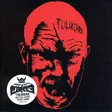
 Album cover — rights belong to the original label
Taantumus came out in 2001 on Bad Vugum, and it sits at the center of the run of albums — alongside Andexelt (1999) and Prospekt (2000) — that carried Circle out of Finland's underground and into real international attention for the first time. By this point the band was seven albums into a catalog that would eventually pass 60 releases, and this trilogy is widely treated as the stretch where outside listeners actually started paying attention.
Stylistically it continues the hypnotic, motorik-driven krautrock of the surrounding records — long, repetitive structures built more around groove and texture than verse-chorus songwriting. It predates Circle's turn toward heavier, metal-leaning material, which would arrive the following year with Sunrise and fully solidify by 2005's Tulikoira.
Taantumus isn't the loudest or the most extreme thing Circle ever made — it's a transitional, confidence-building record, made right as the band's audience started to grow beyond Finland.
A Wider Cast Than Usual
The 2001 sessions brought in more outside players than the two records around it: violinist Pike Kontkanen appears on two tracks, Mika Rättö adds keyboards to three more, actor and musician Markku Peltola plays harmonica on one track, and Heidi Viljanen sings on another — a wider guest list spread across thirteen tracks (twelve originals plus, on reissue, the bonus cut "Veitsi") running roughly 73 minutes. Where Prospekt had leaned into long-form hypnosis, one retrospective review argues Taantumus roughly doubles the song count while sharpening the songwriting, calling it Circle's "most wide-reaching and fascinating 'early years' release" for folding heavy metal, prog, jazz-rock, and psychedelia into the motorik base without losing the thread.
The 2009 Remaster
The 2009 Ektro reissue wasn't just a repackaging of a deleted title — the original Bad Vugum pressing had gone out of print, and the reissue paired a genuine remaster with the extra track "Veitsi." Listeners who've compared the two pressings describe the original mix as muddy in places, with the remaster doing real work pulling tracks like "Pelqton" up from what one review called "a flattened mess" into something closer to what it deserved to sound like. On Discogs the album currently averages 4.44 out of 5 — a small sample, but a consistently high one for a record this far outside the mainstream. The Quietus's own retrospective on the band singles out this stretch of the catalog for its "motorik propulsion and devotion to the riff," describing Jussi Lehtisalo's multi-octave bass lines from the era as "repeated for several minutes at a time" — a fair description of the engine running underneath Taantumus's more varied surface.
Track-by-Track Credits
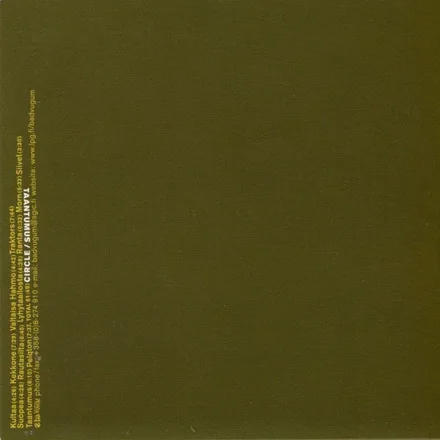
Full session credits get more specific than "a wider guest list": Kontkanen's violin appears specifically on "Kekkone" and "Traktors," Rättö's keyboards land on "Valtaisa Hahmo," "Siivet," and "Pelqton," Peltola's harmonica is confined to "Morn," and Viljanen sings only on "Suopea." A fifth guest goes unmentioned in most write-ups: Tapani Varis plays flute on "Valtaisa Hahmo" alongside Rättö's keyboards. The album was also credited to two production pseudonyms, "Taidemietaa" and "A. Hevipötkö" — the same habit of hiding real names behind studio in-jokes that resurfaced six years later on Panic. Among the twelve original tracks, "Traktors" (7:47) and "Pelqton" (7:37) run longest, while "Ranta," at 35 seconds, is barely more than an interlude.
Taantumus: Frequently Asked Questions
Who exactly plays on Taantumus, track by track?
Pike Kontkanen's violin appears specifically on "Kekkone" and "Traktors," Mika Rättö's keyboards land on "Valtaisa Hahmo," "Siivet," and "Pelqton," Markku Peltola's harmonica is confined to "Morn," Heidi Viljanen sings only on "Suopea," and Tapani Varis adds flute to "Valtaisa Hahmo" — a fifth guest most write-ups leave out entirely.
Was Taantumus produced under pseudonyms too?
Yes — production is credited to "Taidemietaa" and "A. Hevipötkö," in keeping with the band's habit (repeated six years later on Panic) of hiding real names behind studio in-jokes.
How is Taantumus rated by collectors?
Discogs currently shows an average of 4.44 out of 5 — a small sample, but a consistently high one for a record this far outside the mainstream.
What changed in the 2009 Ektro reissue?
Ektro paired a genuine remaster of the original, out-of-print Bad Vugum pressing with a bonus track, "Veitsi" (9:21), that hadn't appeared on the 2001 CD.
How does Taantumus compare to Andexelt and Prospekt?
One retrospective review argues Taantumus roughly doubles the song count of its neighbors while sharpening the songwriting, folding heavy metal, prog, jazz-rock, and psychedelia into the same motorik base without losing the thread.
What are the longest and shortest tracks on the album?
Among the twelve original tracks, "Traktors" runs longest at 7:47, followed closely by "Pelqton" at 7:37. The shortest is "Ranta," a 35-second fragment.