Home / Discography / Meronia
Meronia (1994): Circle's Debut Krautrock Album
1994 · Bad Vugum · Studio album — Circle's debut
The Debut
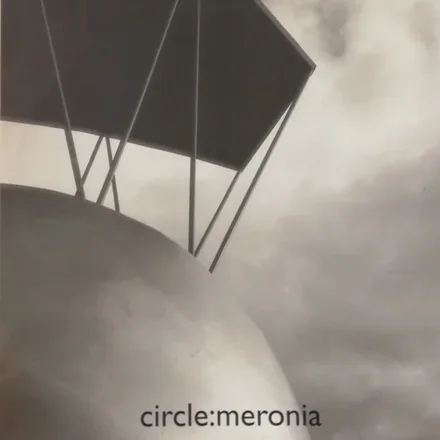 Album cover — rights belong to the original label
Meronia is where the Circle catalog begins: a debut studio album released in 1994 on Bad Vugum, three years after Jussi Lehtisalo founded the band in Pori. It's the earliest entry in a discography that would eventually run past 60 releases, and it already carries the band's defining trait — a refusal to sound like anyone else, including who they'd become later.
The record leans into raw, hypnotic krautrock, and part of it is sung in an invented language created specifically for the album — a detail that shows up repeatedly in discussions of Circle's early work as a signal of how conceptual the band was willing to get even on its first release. It was reissued on Ektro Records in 2007, over a decade after the original pressing, which is itself a small sign of how the band's audience and reputation grew over time.
Circle would go on to move through progressive rock, ambient, and heavy metal across the decades that followed, sometimes within a single record. Meronia is the starting point for all of it — raw, insular, and already uninterested in fitting a genre.
Session Details and Lineup
The 1994 sessions were recorded and mixed by engineer Pentti Dassum over that winter, with Jussi Saivo and Lehtisalo himself credited for additional technical work. The core band on tape was a five-piece — Juha Ahtiainen, Teemu Elo, Juha-Pekka Hietaniemi, Jussi Lehtisalo, and Mauri Päivistö — plus an outside player, Ilkka Lehtonen, brought in specifically for violin, a small but telling sign that even on a debut this raw, Circle wasn't treating the standard guitar-bass-drums unit as sacred. The original CD went out on Bad Vugum under catalog number BAD-43CD.
Fifteen tracks in under 74 minutes is a lot of ground for a first album, and the tracklist shows it: the eight-minute title cut and the nearly seven-minute "Staalo" and "Scoop" sit alongside two-minute fragments like "Wherever Particular People Congregate" and "Merid," as if the band couldn't decide between locking into a groove and just detonating an idea and moving on. Bandcamp Daily's retrospective guide to the band singled this out as proof of a group "not going to play by the book," and noted that Lehtisalo's invented vocal language on the record predates Sigur Rós's better-known Hopelandic by well over a decade, while itself arriving after Magma had already staked out the idea of singing in a language nobody else speaks with Kobaïan.
Reception and Sound
The invented language on the record has a name of its own — fans and RateYourMusic reviewers call it "Meronian." It surfaces most audibly in the album's Gregorian-chant-like vocal passages, sitting over drumming reviewers repeatedly tie to Neu!'s motorik pulse; RateYourMusic's own tagging places the record under noise rock, and at least one review there hears a 90s alt-rock streak close to Helmet running through the same tracks, with icy, sometimes deliberately cheap-sounding synth textures layered on top.
Reaction has split by audience. Collector-facing sites treat it kindly: Discogs users rate the original 1994 pressing 4.07 out of 5 from 14 votes, and the combined master listing across every version averages 4.04 from 85 ratings. Progressive-rock listeners have been cooler — ProgArchives' user rating sits at "Poor," with roughly one in ten voters marking it "only for completionists," and one reviewer there placed Meronia closer to the indie-rock scene of 1994 than to the sound Circle would become known for. Bad Vugum, the small Finnish noise label that issued it, kept releasing the band's early records afterward — Zopalki in 1996 and Kollekt in 1998 — before Lehtisalo eventually launched his own label, Ektro Records.
Reissue History
The album has stayed in print twice since. Ektro's October 2007 CD reissue (catalog EKTRO-001) came with new artwork but no bonus material. A more substantial repackaging followed in June 2016, when Ektro/Full Contact Records and Svart Records jointly pressed a 22nd-anniversary double vinyl edition on limited orange wax, this time adding a bonus track that had never appeared on the original CD.
Meronia: Frequently Asked Questions
What is the invented language on Meronia called?
Fans and RateYourMusic reviewers refer to it as "Meronian." It appears in Gregorian-chant-like passages layered over the album's motorik, Neu!-influenced drumming.
How is Meronia rated by collectors on Discogs?
The original 1994 Bad Vugum pressing averages 4.07 out of 5 from 14 Discogs ratings; the combined master listing across every reissue and pressing averages 4.04 from 85 ratings total.
How do RateYourMusic reviewers describe the album's sound?
RateYourMusic tags Meronia as noise rock and describes it as a 90s alt-rock streak, with comparisons to Helmet, filtered through Neu!-style motorik krautrock drumming and icy, sometimes deliberately cheap synth textures.
Did Meronia land well with progressive-rock audiences?
Not especially. ProgArchives' user rating for the album sits at "Poor," with about one in ten voters marking it "only for completionists," and one reviewer there placed it closer to the indie-rock scene of 1994 than to Circle's later, more recognizable style.
What label released Meronia, and what else did it put out by Circle?
Bad Vugum, a small Finnish noise label, released Meronia in 1994 and went on to issue two more early Circle albums — Zopalki (1996) and Kollekt (1998) — before Jussi Lehtisalo founded his own label, Ektro Records.